




























Affiliate Disclaimer
Some links in this article are affiliate links. We may earn a small commission if you make a purchase through these links, at no extra cost to you. We only recommend products we find useful to our readers
What Is Meditation?
In an exquisite methodology that exists in the tradition of yoga, which is designed to reveal the inter-connection of every living thing. This type of fundamental unity can also be referred as advaita. Meditation is actually the experience of this type of union.
By definition, “meditation” basically means to reflect upon, ponder on, or to contemplate. Sometimes, it can also denote to a devotional exercise of contemplation or even a contemplative discourse of religious or even philosophical nature. The word “meditate” comes from the Latin word “meditari”, which simplifies to think about or even to consider. The root of this word is “Med” is and means “to take an appropriate measure.”
In the context of yoga, meditation, or ‘dhyana’, is defined as a state of pure consciousness. In the yogic path, the limb follows the ‘dharana’, the art of concentration. ‘Dhyana’ in turn precedes the ‘samadhi’, a state of final liberation or enlightenment. These three limbs of ‘dharana’ or concentration, ‘dhyana’ or meditation, and ‘samadhi’ or ecstasy are linked and is also collectively referred as ’samyama’, or the inner practice, of the yogic path.
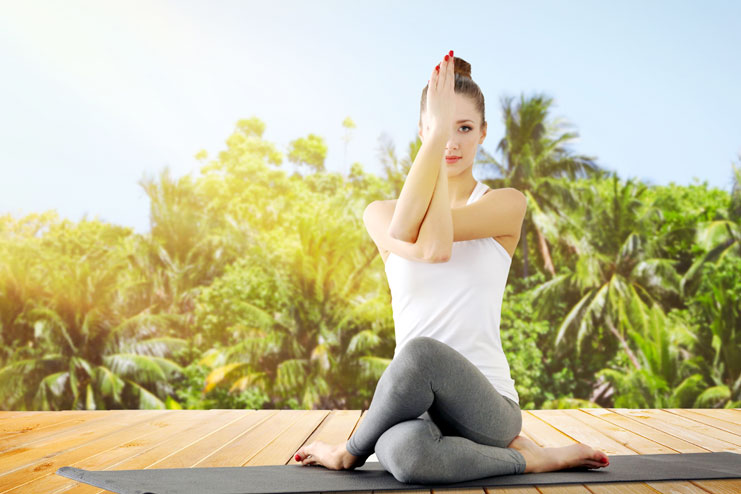 The first four limbs – ‘yama’ or ethics, ‘niyama’ or self – discipline, ‘asana’ or posture, and Pranayama or life – force extension – are considered as external disciplines. Pratyahara, in yogic context, represents the withdrawal of senses. This types of sensual withdrawal basically arises from the practices of the first four steps as well as the links to the external and internal. When we are physically and mentally being grounded, we become aware of our senses, yet get disengaged all at the same time. Without this ability, it is very difficult to meditate. Even though you may need to concentrate in to meditate, meditation is basically more than the concentration. It evolves in an expanded state of awareness.
When we are concentrating, we basically direct our mind toward what appears to be in an object apart from ourselves. We try to become more acquainted with the object and establish contact. To shift in the realm of meditation, we need to be involved with the object; as well as we need to communicate with it. The result of its exchange, is the deep awareness that there are no difference between us and to which we can concentrate or sometimes even meditate upon the object. This meditation brings us to the state of ‘samadhi’, or even self-realization.
Nauli Kriya For Abdomen Health And Perfect Curves (Read Here)
According to Yoga Sutra, our pain as well as suffering is basically created with the misperception, that we are all separate from the mother nature. The realization that we are not separated can be experienced without much effort. However, many of us need the guidance. Patanjali’s eight-limbed system also provide us with the framework that we need.
Meditation For Health
5 Different Ways to Meditate
 Just like there are number of hatha yoga, there are also many number of ways to meditate. The very first stage of meditation is basically to concentrate on a specific object or even establish on a point of focus, with the eyes either opened or closed. Repeating a phrase or word, or audibly reciting a prayer, or even visualizing an image of a deity, or focusing on an object like as a lighted candle are all commonly recommended on the points of focus. Observing or counting the breaths or noticing the bodily sensations are also the optional focal points.
The Use of Sound
 Mantra yoga is the use of a particular sound, or phrase, or the affirmation as its point of focus. The word ‘mantra’ comes from ‘man’, which basically means “to think,” and ‘tra’, which means “instrumentality.” Therefore, ‘mantra’ is an “instrument of thought”. It also has means “protecting the person who receives it.” The basic act of repeating the mantra is called ‘japa’, which also means recitation. Just as the contemplative prayer and the affirmation must be stated with the purpose as well as feeling, a ‘mantra’ meditation practice requires continuous conscious engagement from the part of a meditator.
Chanting, is an extension of mantra yoga, and is also a powerful way to enter in meditation. Chanting is longer than a mantra, and it involves both the rhythm as well as pitch. Dating back to the Vedic times, chanting comes out from the tradition which believes in creating the power of sound and its potential way to transport us to a state of awareness. The rishis, taught that the creation is the manifestation of primordial sound ‘Om’. Which is reflected in the interpretation of the word universe “one song”— ‘Om’ is basically the seed sound of all the other sounds. Chanting often as well as properly can produce a profound spiritual and physical effect.
Many people found that by using a mantra in the meditation very effective as well as relatively pretty easy. Chanting, can sometimes be intimidating for some people. Although chanting can be powerful, reciting a prayer or the affirmation in any of the language can as well be effective.
The Use of Imagery
 Visualization is also an amazing way to meditate; something that the beginners might find very easy to practice. Traditionally, a meditator visualizes their chosen deity, a god or goddess in vivid as well as detailed fashion. But any object is valid.
Neti For Respiratory Problems (Read Here)
Gazing
 Another variation on meditation, is the use of an imagery to maintain an open-eyed focus on an object. This focus is referred as a ‘drishti’, which basically means “view,” “opinion,” or even “gaze.” The choices available here are virtually limitless. Mostly gazing a candle is one of the most popular form of this method.
You can use this technique with the eyes fully opened, and creating a softer, as well as diffused gaze. Many of the hatha yoga poses have the gazing points, and also use drishti is specially emphasized ‘Ashtanga’ style of hatha yoga. Many number of pranayama techniques, also go for a specific positioning of your eyes, such as the gazing of “third eye,” that is, the point between eyebrows or the tip of the nose.
Breathing
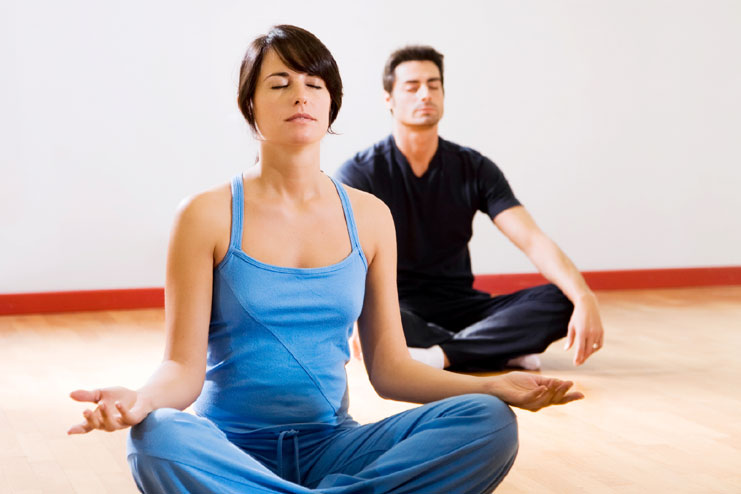 By using breath as your point of focus is another possibility of meditation. You can do it by counting the breaths as you would in the pranayama. Ultimately, meditating on the breath means observing the breath just as it is, without even changing it in any way. Here, the breath becomes the sole object of the meditation. You observe the nuance of your breath as well as each of the sensation it can produce, that is, how it moves in the abdomen as well as torso, or how it feels as it moves inside and out of the nose, its quality, temperature, and so on.
Breath observance is a predominant technique, that is, used by practitioners of the ‘vipassana’, or who are commonly referred as “insight” or “mindfulness” meditation. The word ‘vipassana’, literally means “to see clearly” or “to look deeply,” is interpreted to mean “the place where the heart dwells,” and reflects the premise that our thought arises out from our hearts.
Physical Sensations
 Another amazing way to meditate is by watching a physical sensation. Practice it with a same degree of detail as you can while watching the breath. In this context, you can look deeply, or penetrate, a particular sensation that can draw you the attention, such as how hot or even cool your hands do feel. The increased sensitivity that have you gained because of the asana practice can provide with other points of focus, the strength of your spine or even the suppleness that you feel in the lower body.
Observing a particular emotion or a specific area of the discomfort can also be the possibility. Whatever you are choosing just try to remains your point of focus on the whole practice. You can find that by observing a physical sensation sometimes can be more challenging than observing the breath. For most of the beginners, mantras, chants, as well as visualizations offer a more tangible way to replace or calm the scattered thoughts in our minds, which may seem to be perpetually on the sensory overload.
The Benefits of Meditation
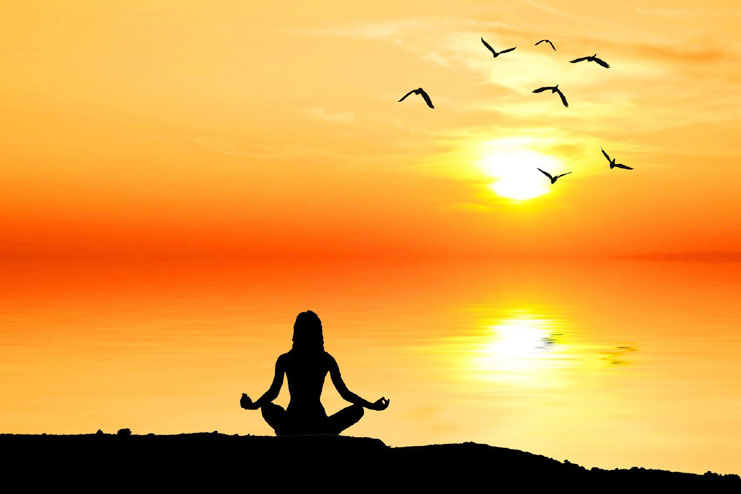 A profound physiological or psychological changes takes place when we are meditating, which causes an actual shift in your brain and in an involuntary processes of your body.
Meditators have decreased the perspiration as well as a slower rate of respiration that is accompanied by the decrease of metabolic wastes in your bloodstream. The health benefits of meditation can produce naturally the reflect of the mental as well as physical effects of the process. Meditation can teach you on how to manage the stress; by reducing stress and in turn enhance the overall physical health as well as emotional well-being. On a more deeper level, it can add in to the quality of the life by teaching to be fully of alert, aware, and alive. In short, it is the celebration of your self.
Pranayama For Proper Breathing (Read Here)