




























Affiliate Disclaimer
Some links in this article are affiliate links. We may earn a small commission if you make a purchase through these links, at no extra cost to you. We only recommend products we find useful to our readers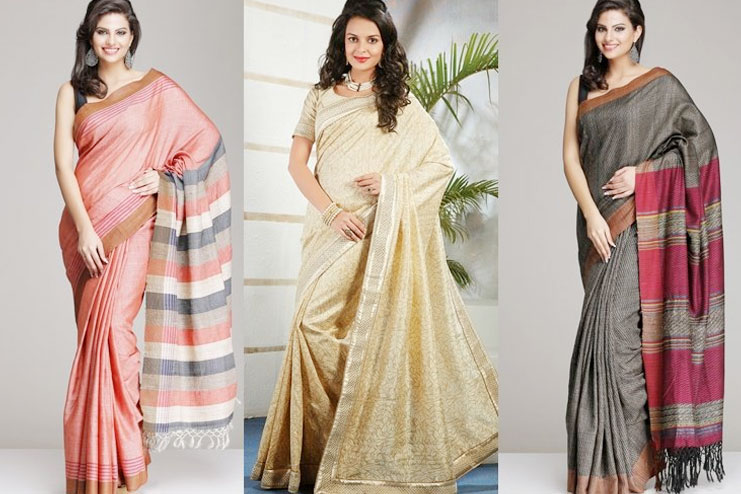
You may be wondering on, what is tussar silk?Tussar silk sarees, also referred as a ‘Wild Silk, Tassar Silk, or Kosa Silk’ is basically an exquisite thread that is obtained from a very wide winged moth which is yellowish-brown in color. Scientifically these moths are known as ‘Antheraea Paphia, basically ’ and they are all a part of a group that is known as the Emperor Moths or Saturnids. These moths are considered as a true wonder of nature. Their wings are being embellished by the circular markings which look like the mirror. Indeed, when you look closely in those circular markings, you will be able to see the reflection of yourself.
Origin And History
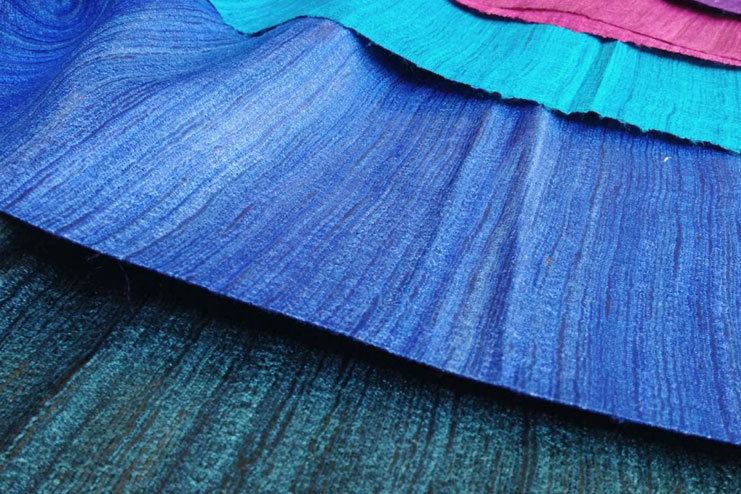 Ko he Sanskrit name of the Desi Tusser. It is being produced mainly in India, Tussar silk is highly valued for the natural Gold colors, which it mostly inherits from “Antheria Paphia”, “Antheria Milita”, and “Antheria Proylei”. As far as the history of the origin is concerned, there is very little data being regarding at the time of the origin.
However, borrowing from all the history of its raw silk, it is said that the Tussar silk was being discovered from the medieval times. Prior to that, there was never any trace of the Silk being made out of any of the other natural or even artificial object in the place of the mulberry fed Silk work.
The cost difference in between the Tussar silk as well as any other forms of the silk arise from this fact that this former worms are not fed on the mulberry. In fact it is of the rearing of Tusser silk worms which make them a very cheap variety. Tussar silk is the illustrious variety as any other.
Sources Of Inspiration
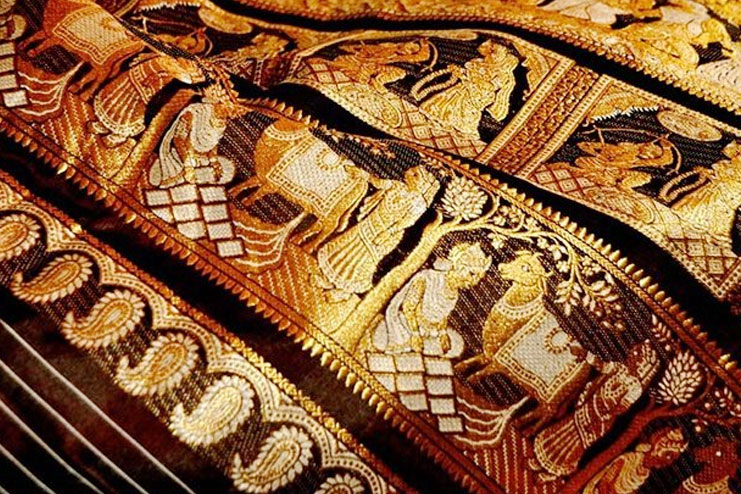 It is as if a lot more in the texture than the mulberry silk, Tussar silk is used in the creation of sarees as well as silk suits. Indian attire is inspired from the traditions as well as values that easily take the shape in Tussar silk. The dull gold texture radiates the works as a suitable base for the embroideries and print motifs which have been inspired from the nature. The floral patterns are in the shapes of trees, buds, bels, leaves as well as leaflets who have enough spark to create and serves as the source of inspiration for the Tusser silk.
Process
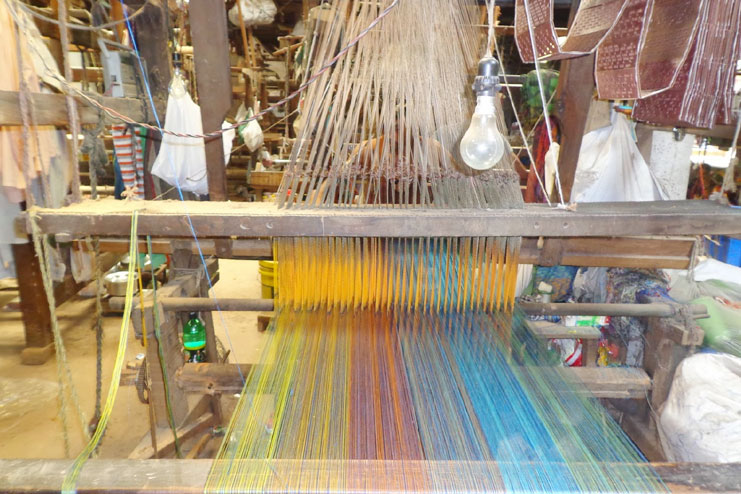 To kill the silkworms, cocoons are being dried in the sun. There is also many variation where these silkworms are allowed to leave, before these cocoons are being soaked in the boiling water to soften the silk and reel them later. Cocoons are being collected, which are mostly single-shelled or oval in shape, and are then boiled in the form to extract silk yarn from it. Boiling is also considered as a very important part in manufacturing of silk as it can easily soften the cocoon and make the extraction of the silk easier. In the conventional sericulture, the cocoons are being boiled with the larvae inside, however if these cocoons are boiled after larvae have left them, then the silk that is made is then known as ‘Non-Violent silk’ or ‘Ahimsa silk’. In China, these silks have been given a different name when the silkworms are being reared from the different plants, as the diet of silkworms will effect on its quality of silk.
Tussar silk is also being considered as more textured than the cultivated Bombyx or “mulberry” silk but it have short fibres, which makes it even less durable. It have a dull gold sheen. As when most of these cocoons are being collected from the forest, it is also considered by many as the forest product.
Faces Behind The Fabric
India is one of the main producer of the Tussar silk with, Jharkhand as the main state of production. Producing Tusser is also a rural art and traditionally, the tribal women in the rural areas were trained in weaving the Silk out of cocoons and weaving the fabrics out of threads hence obtained. Like most of the other textile art, Tussar also became the fabric of mechanization.
The Tussar silk industry, do make an extensive use of the rural as well as tribal labor. The women who are mainly absorbed in the industry are mostly trained into the production of the Silk. It so take them three days to finish single 10 meter Tussar silk cloth. For every employed labor, the main task is to weave at least of 10 Silk sarees in a month. Each of the Tusser silk saree is being sold for more that Rs. 3000. While the rural women, who are mainly involved in the making of these saree earn in between Rs1500 to Rs2500 for a single saree.
Varieties
Tussar, is itself a variety of Silk, which can be divided into many subcategories like the Katia, Ghhichha, Thigh reeled as well as machine reeled. On a further permutation as well as combination of the varieties the two distinct varieties are named as Tusser Ghichha as well as Mulberry Ghiccha.
Wearing The Attire
Tussar silk is a lot more properly textured than any of the other varieties of Silk. The fabric is also much cooler than other varieties and is lot more porous,as well as breathable. It being cooler than any other varieties of Silk makes the Tussar extremely wearable in the warmer parts of the world.
Maintenance
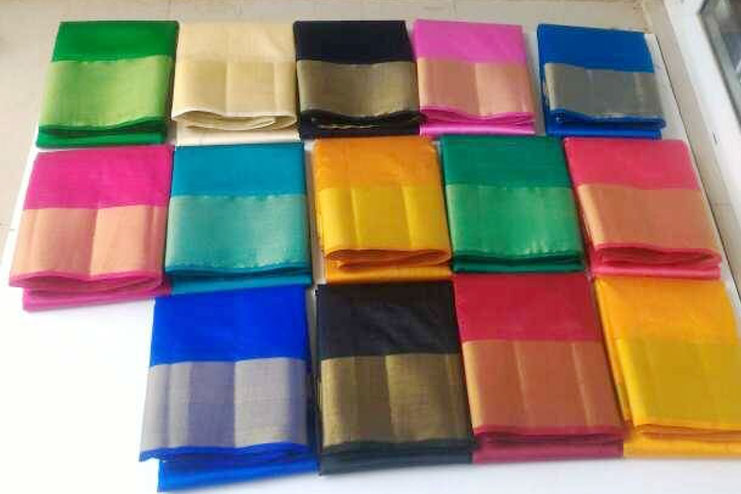 As far as its maintenance is concerned, it is not at all difficult to maintain a Tussar fabric. However, two things must be taken care of. First, the fabric must be prevented from any type of stains. Secondly, it must be prevented from losing the sheen as well as luster. Ironing the Tussar sarees and the suits, as well as getting them properly dry cleaned once in every three months ensures that your ensemble never lose the freshness.
Production In India
India is known as the second largest producer of Tussar silk and an exclusive producer of the Indian Tussar, also known as tropical tussar, which is mostly tended to by the tribals. Most of it is being produced in the Bhagalpur area, where it is known as Bhagalpur silk, Bihar as well as Malda district of West Bengal.Tussar silk is also known as the Orissa’s Pattachitras and West Bengal’s Kantha stitches. Even Chhattisgarh and Madhya Pradesh produce Tussar silk. In recent years, Jharkhand has emerged as one of the biggest producer of the Tussar silk.