

























Affiliate Disclaimer
Some links in this article are affiliate links. We may earn a small commission if you make a purchase through these links, at no extra cost to you. We only recommend products we find useful to our readers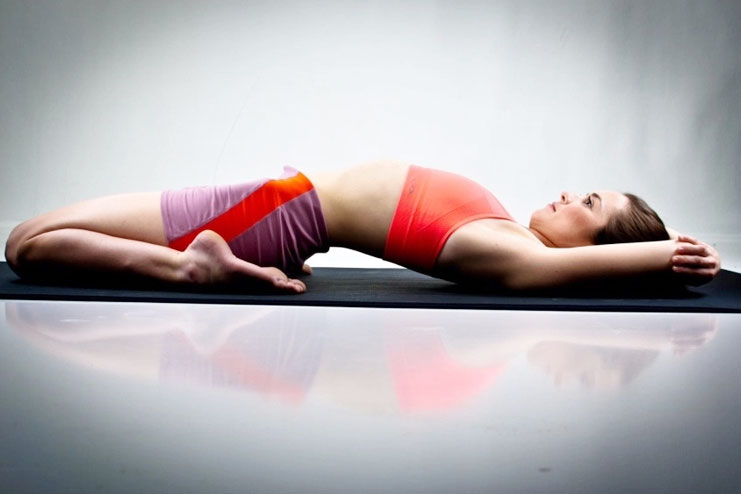
The heart-opening as well as deep spine extension, can really make you feel more heroic when working on reclining hero pose or supta virasana yoga for knee pain. Kneeling on the shins as well as laying way back can provide a tremendous stretch to the hip flexors and quadriceps. The pose can also activate number of energy meridians, by offering therapeutic applications for many range of health problems.
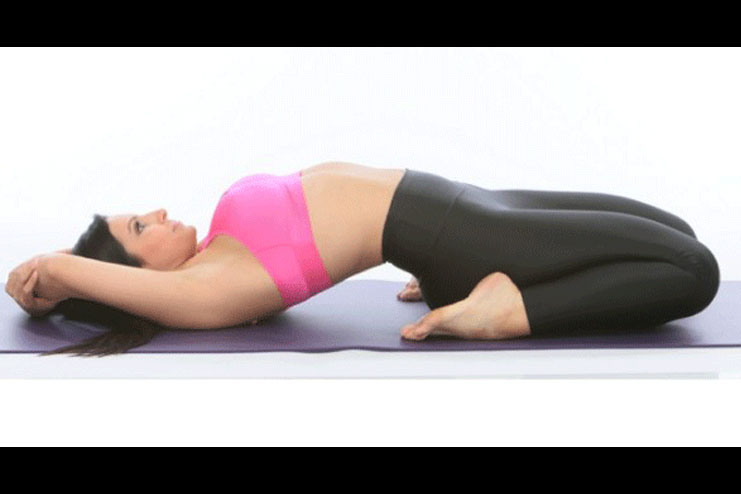
This asana is among the most avoided poses. Although it’s, incredibly beneficial pose for the body, it can be painful and must always be practiced only after you have mastered Virasana. It is considered as an intense variation of Virasana and an intermediate level of asana, which can make your body come in a full reclination. So here, are some of the factors and steps that you must know about supta virasana yoga for knee pain.
What To Know Before Doing This Asana:
 You must be sure that your stomach as well as bowels is empty before you start practicing this asana. Always have your meal at least of four to six hours before you do this asana so that the food can get digested and there is also enough energy to expend during this practice. Some also believe that supta virasana is beneficial after your meals as well, but it is better to consult your instructor.
It is always considered best to practice yoga the very first thing in the morning. But if you cannot work out in the morning, it is ok to practice it in the evening.
Supta Virasana Yoga For Knee Pain
Steps:
 Step 1
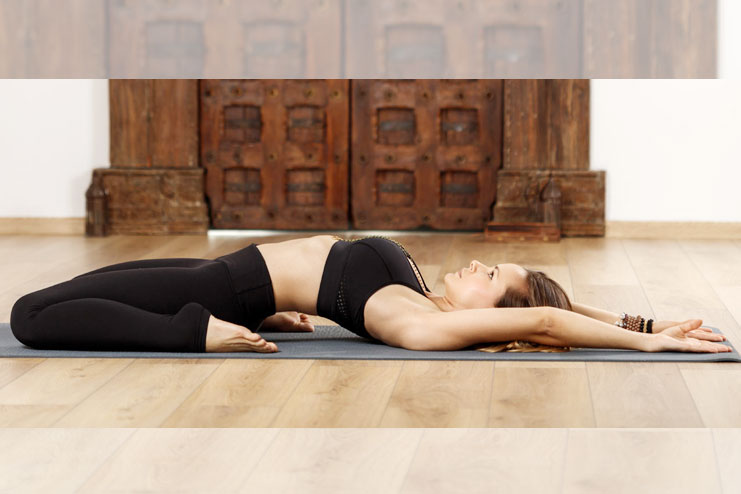
While performing supta virasana, first try to exhale and lower the back of your torso towards the floor. First lean on your hands, then the forearms as well as elbows. Once when, you are on the elbows, place the hands on the back of your pelvis and try to release your lower back and the upper buttocks by spreading the flesh down toward your tailbone. Then finish reclining, either on the floor or on the support blanket or bolster.
Step 2
If the front of your ribs jut up towards the ceiling, it is basically a sign of tight groins, which help to pull the front of the pelvis toward the knees and cause your belly as well as lower back to tense. Then use the hands to press the front of your ribs down slightly and lift the pubis toward the navel. This must lengthen the lower back and lower it towards the floor. Then try to lay the arms as well as hands on the floor, angled for about 45 degrees from the sides of the torso, to the palms up.
Step 3
Now sink the head of the thighbones deep in the back of your hip sockets. It is ok to lift your knees a little from the floor to help soften the groins; in fact, you can try raising your knees a few inches on the folded blanket. Try to allow a little space in between the knees as long as the thighs remain parallel from each other. Don’t, allow the knees to spread wider than the hips – this can cause strain on the hips as well as lower back.
Step 4
In the beginning, try to stay in the pose for about 30 seconds to a minute. Gradually extend the stay for about five minutes. To come out of the pose, press the forearms against the floor and come on the hands. Then, using the hands lift the torso in Virasana. As you come up, lead with the sternum, not the head or chin. Later, come out of the Virasana in more recommended manner.
Video:
Benefits Of Reclining Hero Pose Or Supta Virasana Yoga For Knee Pain:
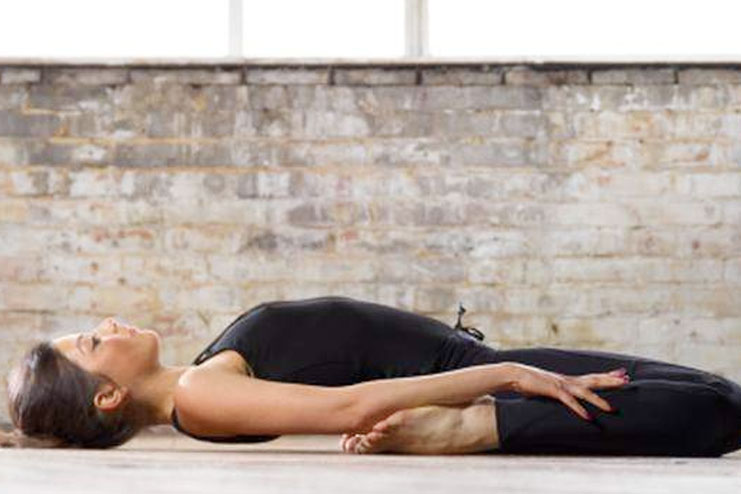 Here are some of the amazing benefits of supta virasana yoga for knee pain:
a. It can give the thighs, ankles, knees, abdomen, as well as hip flexors a deep, good stretch.
b. It can help give relief to the tired legs.
c. It can help to improve the digestion.
d. It can give relief to the menstrual discomfort.
e. It can help to strengthen the arches of your feet.
It has many therapeutic benefits for:
a. Arthritis
b. Diarrhea
c. Asthma
d. Digestive problems
e. Head cold
f. Headache
g. Flat feet
h. High blood pressure
i. Insomnia
j. Intestinal gas and acidity
k. Infertility
l. Menstrual discomfort
m. Sciatica
n. Varicose veins
o. Respiratory ailments
Contraindications:
If you are having any serious knee, back, or ankle problems, then try to avoid this pose unless you are having an assistance of an instructor.
Modifications And Props:
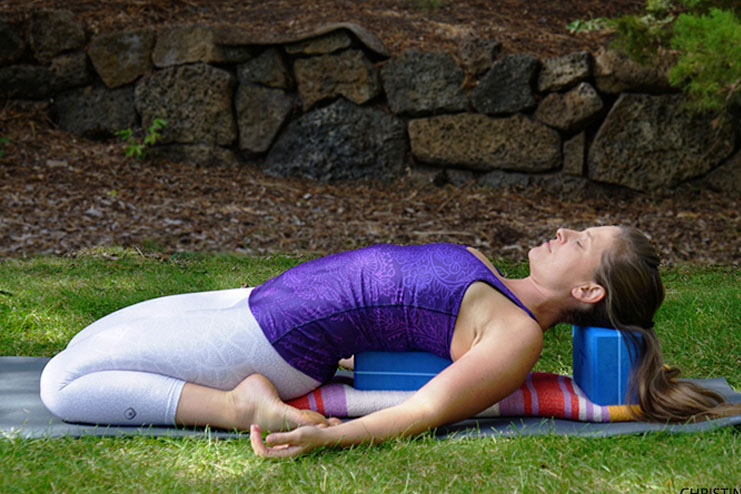 If you are not able to recline totally on the floor, try to set a bolster or one or more folded blankets behind you to support your spine as well as head. Try to use as much height as possible to make the position comfortable.
To help in releasing the groins, try to lay on some weight across the creases of top thighs where you join the front of the pelvis. Then start with a 10-pound of sandbag and gradually increase over time the weight to 30 pounds or so.
Deepen the Pose
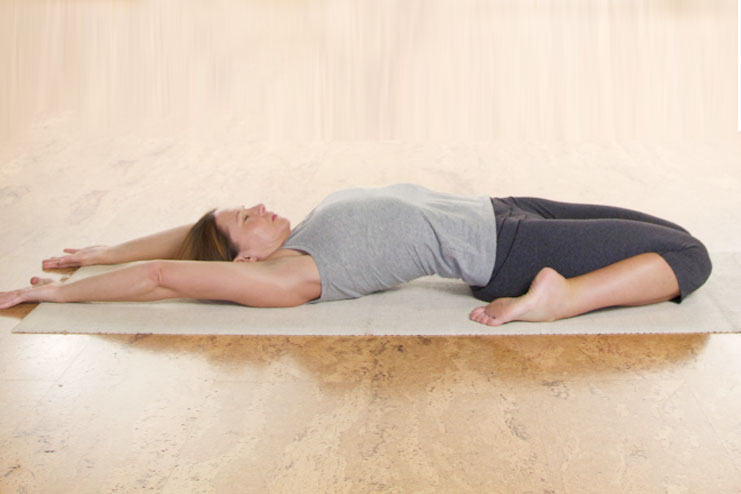 You can involve your arms in the pose. While inhaling, raise the arms toward the ceiling, parallel and perpendicular from the floor. Then try to rock back and forth for a few times, further broadening the shoulder across the back, then stretch the arms overhead, on your floor, palms up to the ceiling. Try to rotate the arms outward, so that the outer armpits can roll toward the ceiling, and pull the shoulder blades down the back toward the tailbone.
Preparatory Poses:
a. Bound angle pose or Baddha Konasana
b. Child pose or Balasana
c. Cobra pose or Bhujangasana
d. Cow pose or Gomukhasana (leg position)
e. Hero pose or Virasana
Follow-up Poses:
Just like its upright cousin, supta virasana is also an excellent preparatory pose for many types of asanas, that includes bound angle pose or baddha konasana, lotus pose or padmasana, crow pose or bakasana, most standing poses, and inversion or backbend poses.
Beginner’s Tip:
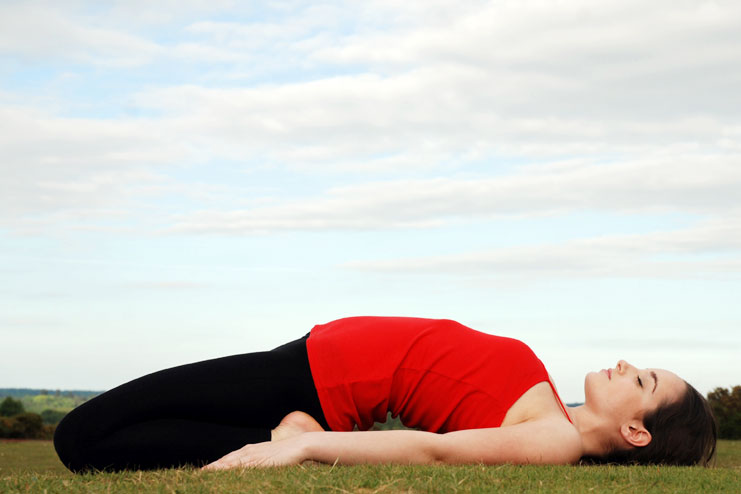 If your thighs are insisting on sliding apart, then you must try one of two of the short-term solutions: that is bind the thighs together with a strap positioned around mid-thighs; or squeezing a two to three inch thick book in between the thighs. In both the cases always be sure to draw the inner groins sharply up in the pelvis.
Variations:
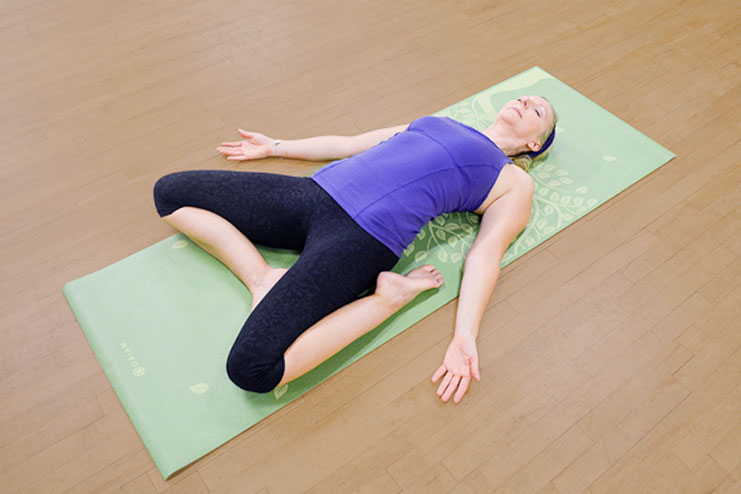 Before doing supta virasana, you can start with halfway variation, Supta Ardha Virasana. To sit in the Ardha Virasana, draw your right leg back in the Virasana. Try to keep your left knee bending with the foot from the floor, or straightening the left leg by pushing through the heel. Then recline as described, either on a support of the floor, following the cautions. Come out as recommended for the Virasana, then repeat with your left leg back.
The Science Behind Supta Virasana Yoga For Knee Pain:
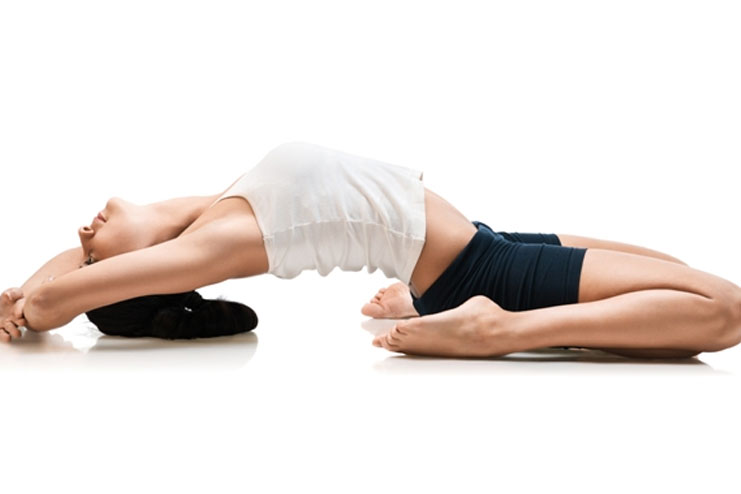 This pose can give the pelvic region as well as the abdominal organ a good stretch. Therefore, all the digestive and digestion problems will improve.
Supta virasana can open up the pelvic area, chest, as well as the torso. It can give relief from the body of many discomforts, and conditions like colds and headaches.
This pose stimulate the circulation of the blood in hips, thighs, and knees, thereby solving all the problems in the areas. It can improve the flexibility of your spine.
With time as well as practice, this asana can easily become the resting pose which can deeply renew and rejuvenate your entire body.
Caution:
Supta Virasana, or the reclining variation of Virasana, is basically an intermediate pose. Do not perform this pose unless you are able to sit on your buttocks easily on the floor in between the feet.