






















Affiliate Disclaimer
Some links in this article are affiliate links. We may earn a small commission if you make a purchase through these links, at no extra cost to you. We only recommend products we find useful to our readers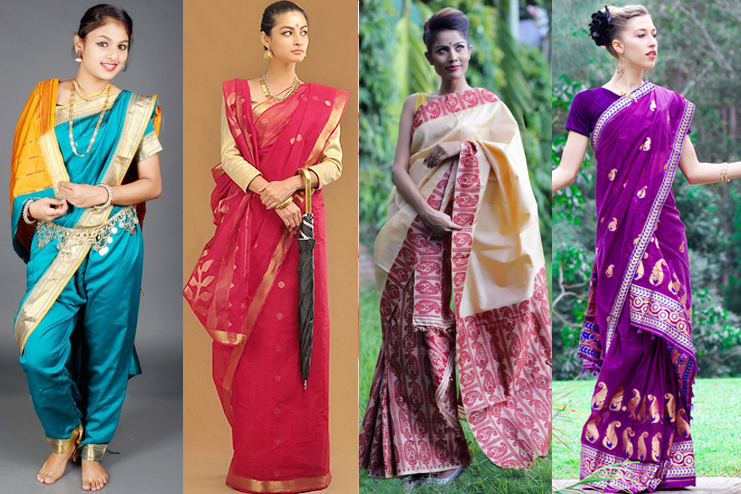
India is the continent of many languages as well as cultures. If you go from North to South and East to West, you will come across many numbers of fashion, along with style and language. Just like that, there are different saree style and saree wearing style in every state. Change is the basic truth in the case of fashion trends.
However, one trend that has always hold its ground through out the many centuries is the draping style to wear traditional sarees. A saree is a garment which is a true reflection of a woman’s elegance as well as timelessness, and India is the treasure trove of different varieties of saree.
Every state also boasts of about multiple ways a saree can be draped keeping the sync with needs of a woman in that region. Hence, there is also a wide spectrum of different styles of women from all the strata of society. Here, are 14 different Indian saree draping styles that have inspired many international fashion designers.
How To Wear Saree In Different Style
Here are some different styles of wearing saree as well as diverse saree draping styles that you must know, and start wearing in any fashion show that you want.
1. Athpourey Saree Style From West Bengal
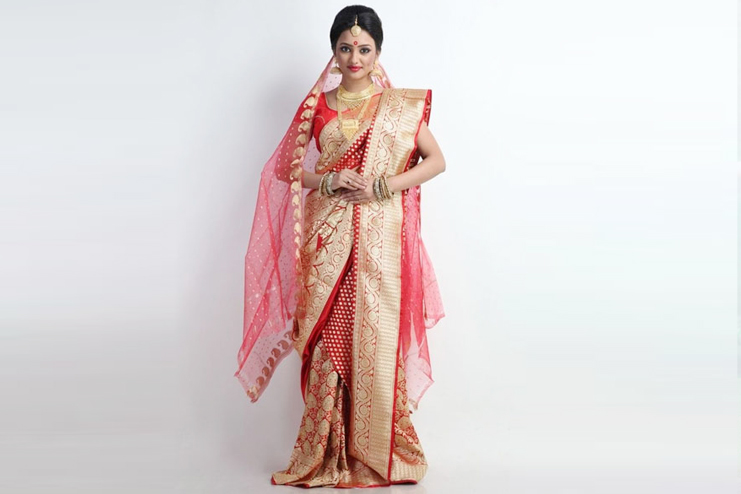 One of the most amazing as well as recognizable saree draping style is Bengali style. Unlike in the modern day saree, it has a box pleat in front. The pallu also comes from the back to the front that is on both sides. Traditionally, a bunch of keys was supposed to be attached to this pallu that is thrown over the right shoulder. This signified as the most important woman in a household and is a great matter of pride that is to be given in the reigns of this entire house. Learn how to drape a Bengali style saree in this video.
Video:
2. Nivi drape From Andhra Pradesh
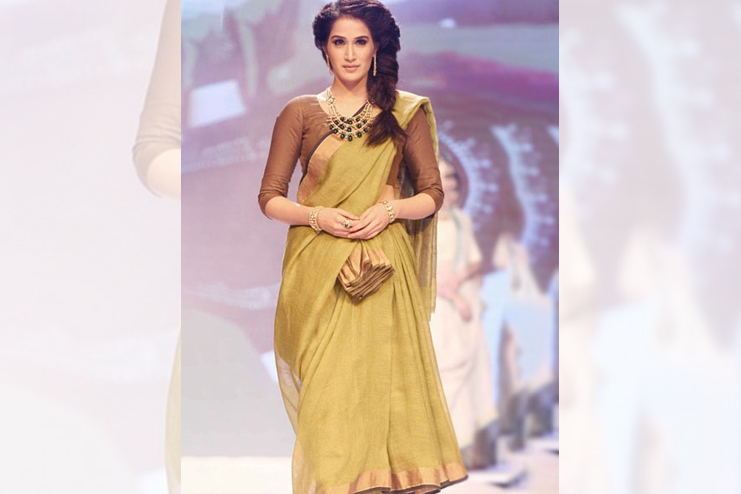 It is one of the easiest drape styles, and it has been originated from the Andhra Pradesh. For girls, who are also new to this six-yard-long attire, this style is one of the easiest to pull off. In this style, a saree is properly draped, and the palla is beautifully pinned to shoulder in an aesthetic pleated format.
There are also two ways to wear this style – modern nivi as well as kacchanivi. While this modern nivi involve a simple drape with the palla pinned to your shoulder, the kacchanivi involves its pleats to pass through legs and also tucked in the back of waist. This lets the free movement by covering legs.
Tips to consider: You can use a fancy pin to pin pleated pallu. To freshen up the look, try to pair this style with a Nepali blouse also known as Cholo.
3. Kappulu From Andhra Pradesh
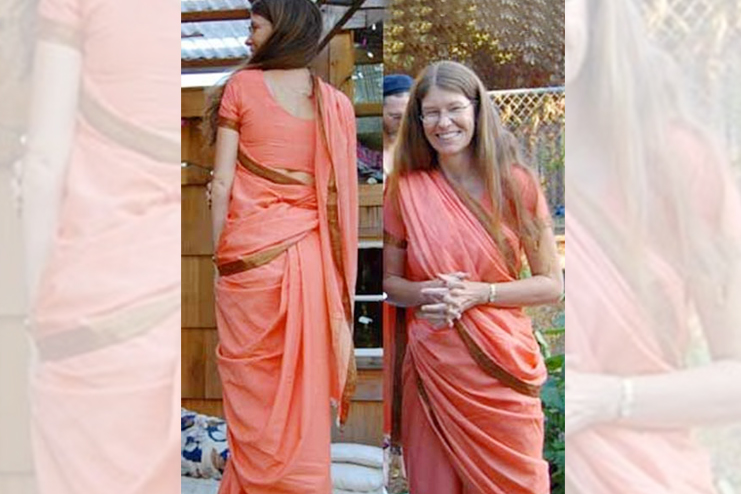 Worn by older women of kappulu caste now-a-days, this type of drape is undoubtedly the most elegant. This saree is being wrapped from left to right unlike any other forms of a saree which is tied from the right to left. The kappulu style also aptly flatter a woman’s curves and the longer the saree is, the better it look.
It also have two stand out features, one is narrow pleats at back which also flatter the form and the second is two cascades of cloth that is formed by twisting in the end piece twice around your body. The pallu is thrown over right shoulder and can even hang loose or be pulled to cover both of the shoulders or wrapped around the neck as per the convenience.
4. Mekhela chador From Assam
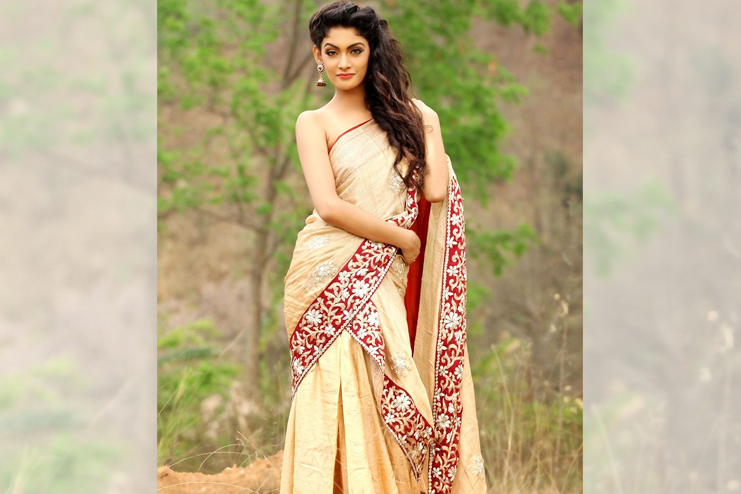 It is one of the most amazing way to wear a saree, the mekhela chador is worn by petite beauties of the Assam region. It comes into two main pieces, and the bottom is dressed in a sarong with the pleats in front whereas the end of the upper garment is just tucked on the left side of the waist in a triangle and the other end is thrown over the shoulder like a shawl.
5. Nauvari Saree From Maharashtra
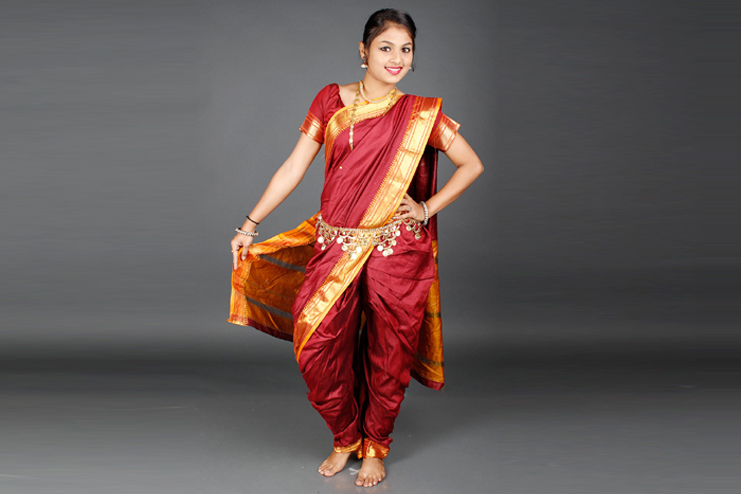 The Nauvari or the nine-yard saree speaks about a strong, independent women of the Maharashtra. This type of saree draping style is being distinguished by the unusual draping pattern that necessitates that it being worn around legs like dhoti while the upper part is worn like a regular saree. The best examples of this nauvari saree is being demonstrated by the lavani folk dancers. This style permits an easy movement of legs accentuating every move of a wearer very elegantly.
6. Mohiniattam From Kerala
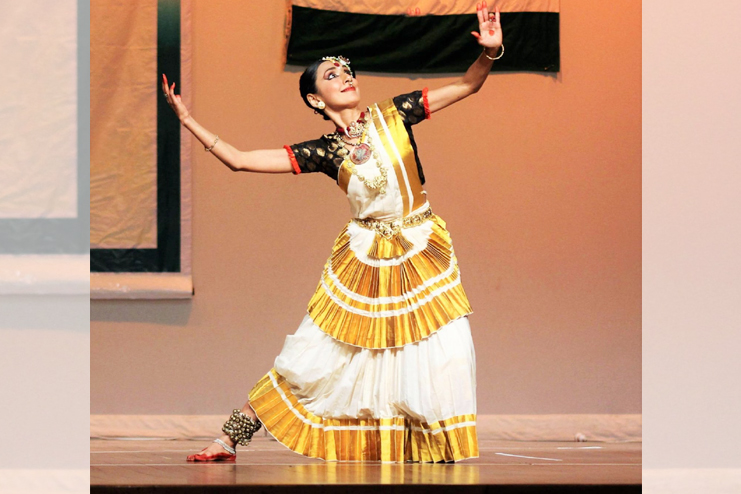 This drape is being primarily worn by Golla or shepherd and the Gudati Kapulu or agriculture communities of the Narasannapalle, which is a village in Kadapa district of Andhra Pradesh.
Though the drape also begin like a normal nivi drape, once when the pleats are properly made, they are being twisted around the body and also tucked in the waist from other end instead from the front.
The pleats are then being rolled outwards and then secured by wrapping them with the innermost layer. The lower borders are also being picked at the two extremes and being brought to the waist at back from either side to get tucked inside.
This needs a material like the silk which can easily hold the shape for long hour.
7. Seedha Pallu From Gujarat
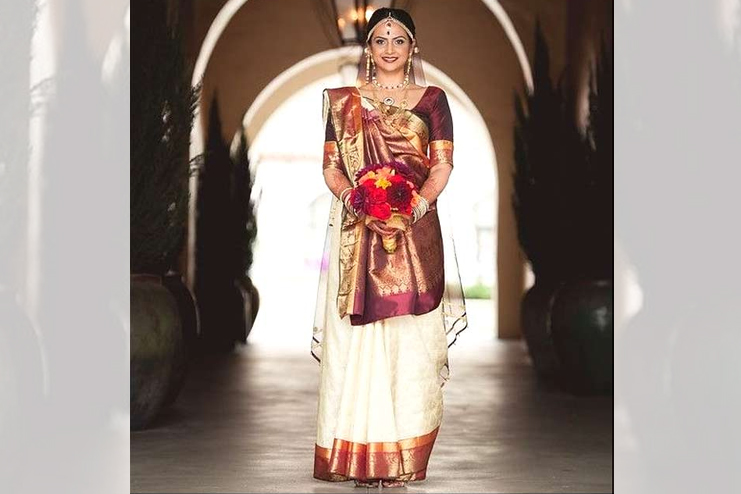 This is an everyday saree draping style in Gujarat, this saree drape also resembles a lehenga choli in which the pallu of a saree is being used in the place of a dupatta. Which permits an immense freedom of the movement and work well for a heavy sarees in which the shoulder does not have to carry off the weight of a heavily worked pallu. Pallu being in the front is also perfect for the demonstration of a intricate work on pallu and its border.
8. Surguja From Chhattisgarh
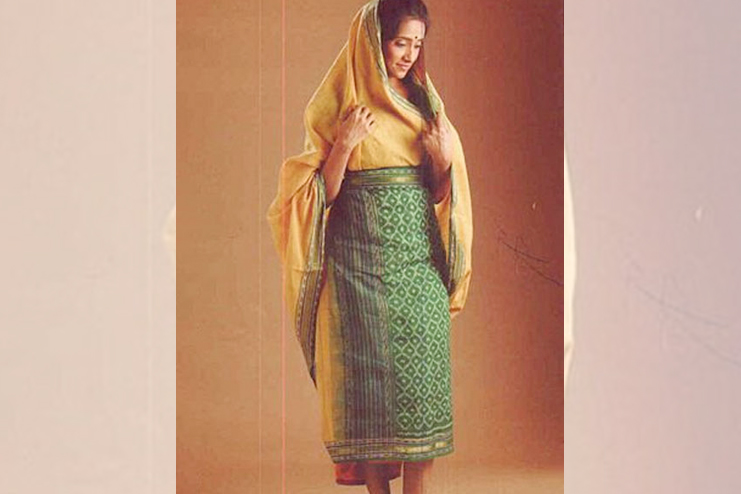 This elegant way of the draping a saree, is mostly worn by the dancers of a Oraon community in Chattisgarh. It is a 5.3-long-yard saree that is used to create a stand out whirling effect in the end. The loose ends are being tucked in front and back as it also permits an immense freedom of movement to dancers.
9. Pinkosu From Madurai
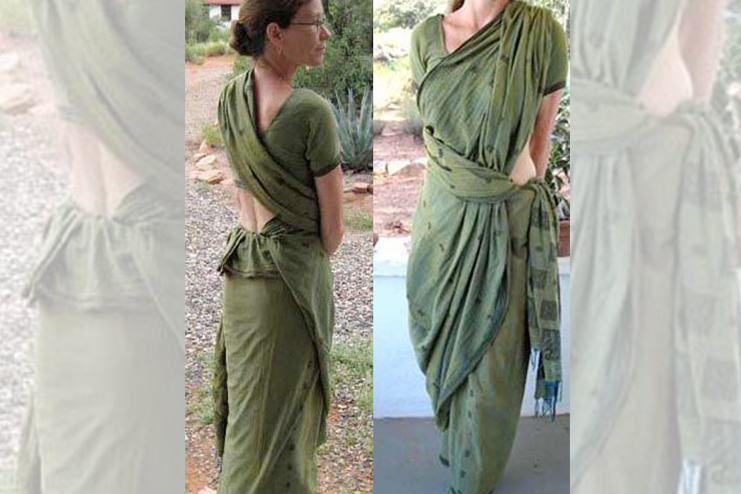 This elegant style is being worn by the women in Tamil Nadu. It is also perfect for a hot weather, this type of draping can even be done without a petticoat. The term ‘pinkosu’ means “back pleats”. The drape is being wrapped 1.5 times around your body, for more amount of coverage.
This pleat will then fall towards outside of a wrap unlike the nivi style. Therefore, the underside of a saree will also be showing. For this a saree must be chosen accordingly. A homespun handloom cotton sarees can work very well as they are the most reversible.
10. Bootheyara From Karnataka
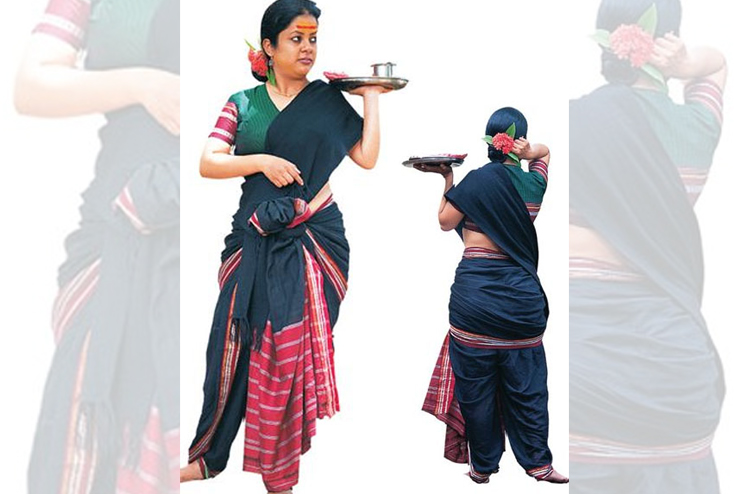 A ceremonial performers of the nomadic origin is being associated with this type of draping style. It is draped from a 8-yard saree, can be used either as a one-piece lower pant style drape, or even a two-piece drape that involves a shawl to cover up the bust, depending on comfort of a wearer.
The best saree for this type of style is cotton or a cotton-silk blended saree.
11. Coorgi Style From Karnataka
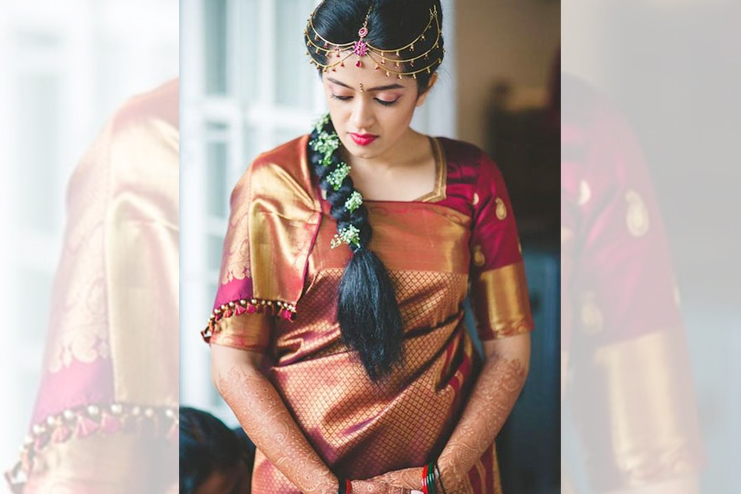 Coorgi style of draping has been mentioned in the traditional story of the Kaveri and Agastya. This draping style has been evolved to help the Coorgi women lead an active life, that is climbing of the hilly slopes of the Western Ghats as well as trees on a daily basis.
Traditionally, it is being paired with full sleeved blouse, this draping style has the pleats at back. The end of this sari is also brought below from the left shoulder, and is secured over the right shoulder in firm knot called the ‘molakattu’. Now-a-days, the red as well as gold silk kanjeevaram is also being worn in Coorgi style by the brides during a wedding ceremony.
12. Gol sari (Parsi drape)
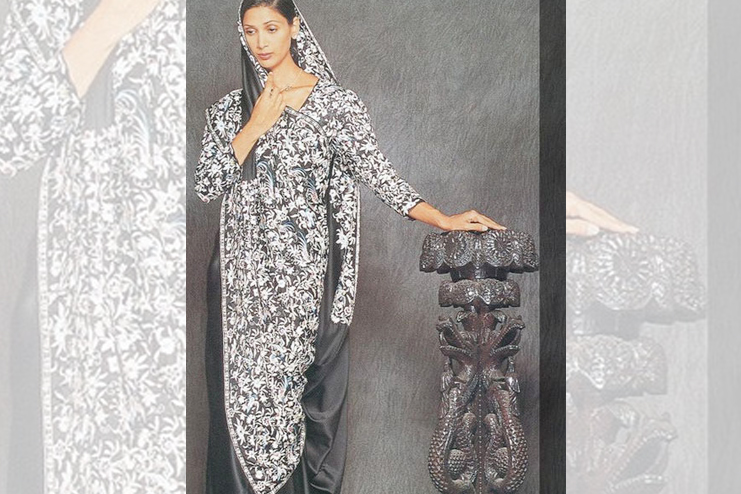 This simple, as well as elegant Parsi drape is being worn by the most Parsi women during festivals, and even on regular basis. Parsi women started wearing these way of saree after the Saree Perawan ceremony, which is a kind of a rite of the passage ceremony.
Most of the Parsi women always prefer a very light chiffon or even georgette saree for this type of drape. It is known as a gara, the pallu is being taken from the behind and also draped over a blouse.
It do hang the loose folds over the left shoulder. It is then brought over a right shoulder and folds are splayed out in the front. The pallu front falls close to the hem.
13. Madisaru From Tamil Nadu
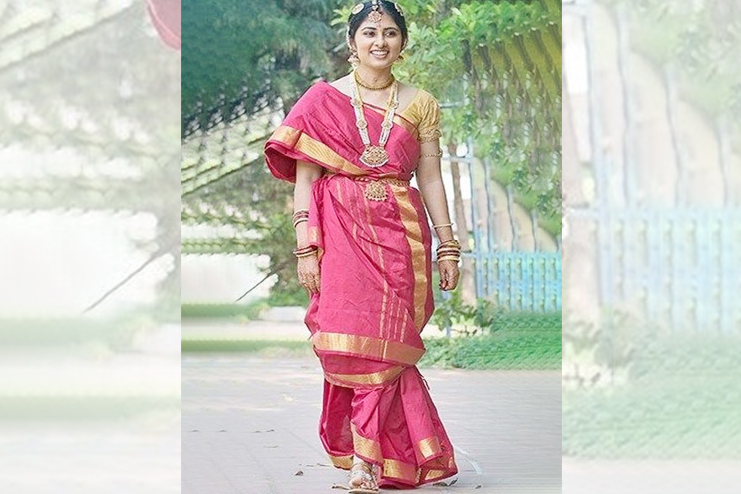 One of the very important part of a Iyer as well as Iyengar culture of the Tamil Nadu, is the Madisaru that was worn by the women, traditionally after a marriage. Now-a-days however, this type of draping of a saree is sported mostly on the special occasions and festivities.
It is considered as one of the most toughest styles to drape, and if worn properly, it do not require the use of a blouse or even a petticoat. It also follows a ardhanareeshwara style of the draping, meaning the half man as well as half woman; the lower half is being draped like a dhoti while the upper half is being pleated just like a saree.
14. Santhal Drape From Jharkhand
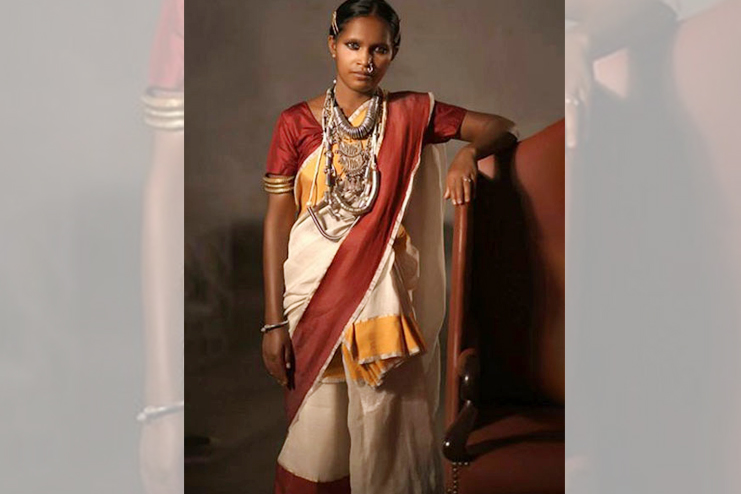 The traditional santhal draping of a sarees are being characterised by chequered pattern. It is one of the most simplest sarees to drape, and it has evolved over the years with the improvement in economic status of a tribe. It is very similar to that of Bengali saree drape.
It also have a box pleat at front and the pallu is being pulled over from the left shoulder into a big triangle. The rest of this pallu is also tucked into the front. This style is also incredibly simple as well as free, just like a lifestyle and thought a process of a santhali people.